


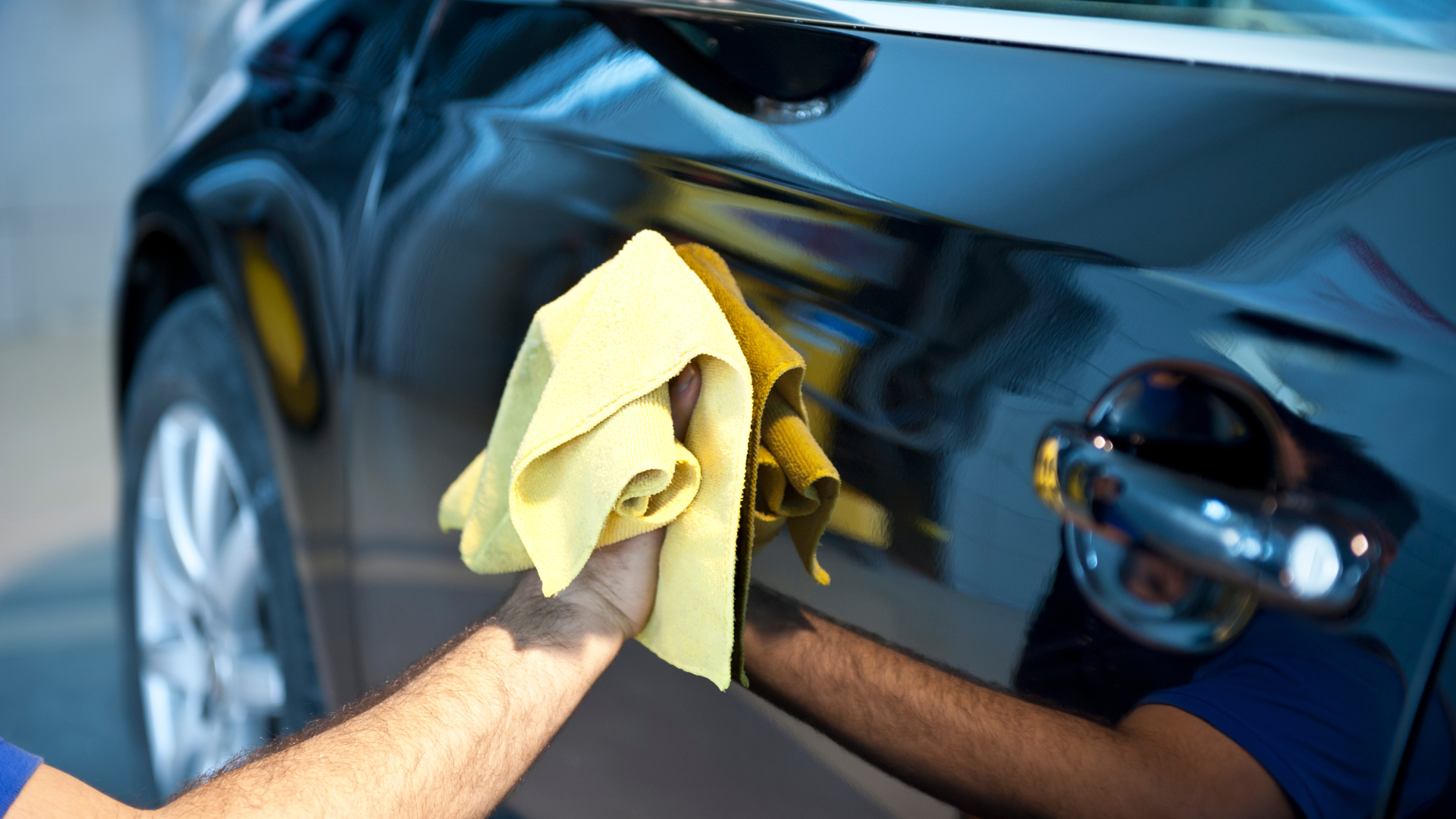
Looking after your car’s bodywork involves more than just a quick wash. Car polishing is a key step in making the paintwork shine, protecting the surface and preserving the vehicle’s value. Often confused with buffing or waxing, this finishing touch delivers an unrivalled shine and can easily be done at home, provided you have the right products and follow the correct technique.
Why polishing is an important finishing touch
Over the years, even with proper care, the paintwork naturally ages. Frequent washing with brushes or overly harsh products creates micro-scratches, UV rays dull the colour and oxidise the bodywork, whilst pollution, dust, salt and even bird droppings gradually attack the protective clear coat.
The result: the bodywork loses its original shine, becoming dull and less pleasing to the eye.
This is where car polishing comes in. This maintenance procedure acts as a rejuvenating treatment for the paintwork. By filling in micro-scratches and smoothing the surface of the bodywork, it restores the colour’s intensity and depth. Polishing leaves a fine layer of shine that acts like a ‘mirror finish’, evening out the visual appearance and giving the vehicle the look of a bodywork fresh from the showroom.
What’s more, this process isn’t just about aesthetics: a well-polished vehicle gets dirty less quickly, as the surface becomes smoother and attracts less dust and grime, making subsequent washes considerably easier.
The difference between buffing, polishing and waxing
These three techniques are often confused, but they serve different purposes:
Polishing: correcting imperfections
Polishing works deep down to correct imperfections and remove a thin layer of paint to eliminate micro-scratches.
This is a more thorough stage of bodywork restoration. It is not simply a matter of making the surface shine, but of correcting imperfections in the paintwork. When polishing a car, a very thin layer of paint is removed using specific abrasives, which helps to eliminate micro-scratches, swirl marks left by washing, oxidation caused by the sun, or even certain stubborn marks.
Polishing is particularly recommended when the bodywork looks dull despite frequent washing, or when you want to restore a ‘like-new’ appearance to tired paintwork. However, this step must be carried out with care and not too often, so as not to weaken the paintwork.
Buffing: enhancing the shine
Polishing, on the other hand, restores shine by temporarily filling in imperfections and enhancing the bodywork’s lustre.
Unlike polishing, buffing does not remove any material. Its role is to improve the appearance of the bodywork by temporarily filling in micro-scratches and minor imperfections. It therefore acts as a cosmetic corrector, restoring depth and intensity to the colour.
Glossing creates a ‘glossy veil’ effect that evens out the surface and reveals the paintwork’s full lustre.
It is the ideal step to restore a brilliant appearance and enhance the value of your vehicle before a sale, an exhibition, or simply for the pleasure of seeing it gleaming.
Waxing: long-lasting protection
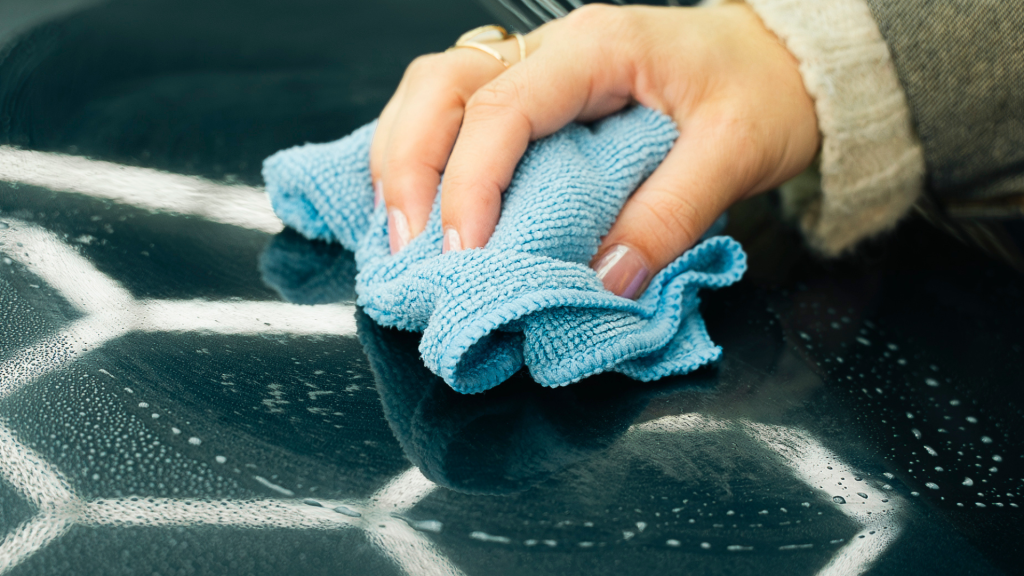
Finally, waxing is the final step in a comprehensive bodywork maintenance routine. It is not intended to immediately correct or enhance the paintwork, but to protect it over the long term. By applying a thin layer of protective wax, an effective barrier is formed against UV rays, humidity, acid rain, dust and dirt.
Waxing also makes maintenance easier, as a well-waxed paintwork attracts fewer contaminants: water beads up and runs off (water-repellent effect), and washing becomes quicker and more effective.
As a complement to a polish, it guarantees that the visual shine is prolonged whilst preserving the original clear coat and paintwork.
In summary: polishing corrects; buffing enhances; waxing protects.
And for the best waxing results, do check out our article: Rain-X Instant Wax: Mirror like shine in minutes
The benefits of car polishing
Regular polishing offers several benefits:
- Bodywork shine: an immediate mirror-like finish, ideal for enhancing your vehicle’s appearance.
- Protection: improved resistance to UV rays and the elements.
- Hiding micro-scratches: minor imperfections become much less visible.
- Easier maintenance: dirt sticks less to a smooth, polished surface.
In more details:
Bodywork shine
The main benefit of polishing is the immediate visual effect. The paintwork gains depth and lustre, creating a true mirror-like finish. Colours become more intense and reflections sharper, giving the car a showroom-quality appearance. For those considering selling their vehicle, this renewed shine is a feature that can really appeal to prospective buyers.
Protection against environmental damage
As well as enhancing the bodywork, polishing offers additional protection. It provides a barrier against external factors such as UV rays, which cause the paintwork to fade over time, or adverse weather conditions, such as acid rain, road salt and pollution. This thin protective layer helps to slow down the ageing of the paintwork by preserving its shine and preventing premature oxidation of the clear coat.
Hiding micro-scratches
On a daily basis, the bodywork is subjected to minor damage: car wash brushes, friction, dust particles… These repeated impacts cause micro-scratches that detract from the smooth, even appearance of the paintwork. Glazing works by visually filling in these imperfections, making them much less visible to the naked eye. The result is a uniform and more attractive surface, even though no material is removed, unlike with polishing.
Easier maintenance
Finally, another significant advantage of glazing is the ease of maintenance it provides. A buffed bodywork is smoother and less porous, which reduces the adhesion of dirt, dust and rain marks. In practical terms, this means the car stays clean for longer and that future washes will be quicker, simpler and require fewer cleaning products.
In short, polishing isn’t just about aesthetics: it’s a genuine bodywork maintenance routine that helps preserve the paintwork, enhances the value of your vehicle and makes day-to-day cleaning much simpler. It’s the ideal combination of shine, protection and practicality.
Polishing your car at home: a simple method
Polishing can be done by a professional, but it’s perfectly possible to do it successfully at home.
- By hand: more economical, but time-consuming and requires a bit of elbow grease.
- With a car polisher: a more even result, saves time and gives a more professional finish.
Polishing by hand: the economical and accessible option
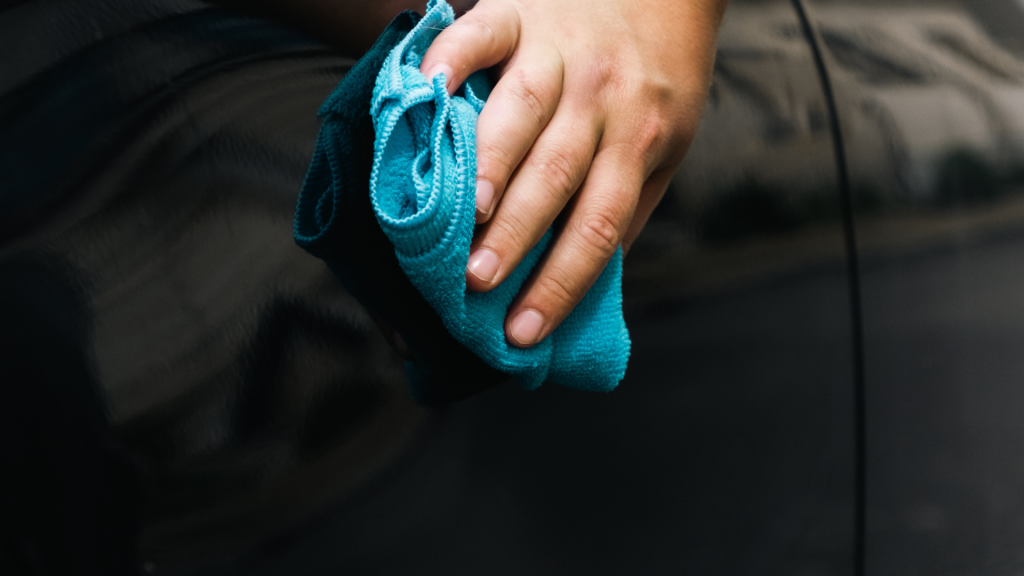
Manual polishing is the most affordable method, as it does not require investment in a machine. All you need is a microfibre cloth, a specialised sponge or an applicator pad, combined with a good polishing product. This method is ideal for beginners or for spot repairs, for example on a specific area of the bodywork.
However, it requires more time and physical effort. Movements must be steady and circular to achieve a consistent result. Manual application allows for better control, but the finish may be less brilliant than with a machine, especially on very large or damaged surfaces.
Polishing with a car polisher: speed and a professional finish
Using an electric polisher allows you to work more quickly and achieve a uniform result across the entire bodywork. The machine applies the product evenly and consistently, reducing the risk of streaks or ‘missed spots’. It is particularly effective for treating large body panels or dull paintwork, whilst giving the car a professional-quality finish.
As well as saving time, the polisher reduces physical fatigue and enhances the ‘mirror’ effect of the polish. However, it requires a small initial investment and a bit of practice to properly control the speed and pressure applied, in order to avoid overheating or damaging the surface.
Steps to follow
1. Thorough wash
Before starting any polishing work, it is essential to begin with a thorough clean of the bodywork. Use a specialist car shampoo designed to effectively remove dirt, pollution residues, mud and grease marks without damaging the paintwork. Avoid household cleaning or overly abrasive products that could damage the paintwork. A thorough wash ensures you are working on a clean surface and prevents dust particles from scratching the bodywork during polishing.
2. Thorough drying
Once the car has been washed, it is essential to dry it thoroughly before applying the polishing product. Use a high-quality microfibre cloth or a chamois leather to absorb the water without leaving streaks or causing micro-scratches. The car must be completely dry, as a surface that is still damp will prevent the polishing product from adhering properly and reduce its effectiveness.
3. Applying the polishing product
Take a small amount of product, about the size of a hazelnut, and apply it to a clean microfibre cloth or the foam pad of your polisher.
Work on small areas at a time to achieve a consistent finish. Apply the product using smooth, circular movements to distribute it evenly and effectively fill in micro-scratches. If using an electric polisher, adjust the speed and apply light pressure to avoid overheating the surface.
4. Wiping and finishing
To easily restore shine and protection to your vehicle, you can use the Cerami-X Exterior Detailer.
This finishing treatment creates an invisible barrier that repels water, dirt and other contaminants, insects and other impurities, whilst instantly reviving the bodywork’s shine. Its advanced technology, based on HydroShield ceramic polymers and Si-O Technology, acts as a protective shield against UV rays and external aggressions.
To apply, simply follow a few simple steps: spray the product generously onto one area at a time, then rub the surface with a clean, dry cloth using circular motions. Dry with a second microfibre cloth to achieve a smooth, even finish. Repeat the process over the entire vehicle for a consistent, brilliant finish.
We’ve even put together a tutorial for you! 😉
How often should you polish your car?
The frequency depends on several factors and on how much your car is exposed to the elements:
- A car that’s parked outside and exposed to the elements should be polished every 3 to 4 months.
- A car with little exposure to rain and sun may only need to be polished once or twice a year.
- Dark paintwork, which is more susceptible to micro-scratches, requires more frequent maintenance.
What products should you use for a successful polish?
To achieve a long-lasting shine and effectively protect the bodywork, we recommend using:
- A wax, ideal for an instant showroom finish.
- A ceramic-enriched product for enhanced protection of your bodywork.
- A car shampoo, essential before polishing to ensure a perfectly clean surface.
- High-quality microfibre cloths for streak and scratch-free drying.
- A car polisher (optional): for a quick and even finish.
Final thoughts
Car polishing isn’t just about aesthetics: it’s a proper maintenance routine for your bodywork, which restores shine, protects the paintwork and enhances your vehicle’s appearance. By using the right products and following the steps outlined, you can achieve a professional shine, right from your own garage.
This guide focuses mainly on polishing and finishing your car, but if you’d like to read a more comprehensive guide explaining everything you need to know about car maintenance from A to Z, click here.
👉 How to make your car shine: washing, polishing and professional finishing